 Train Eat Repeat
Exercises › Kettlebell swing
Kettlebell swing
A fast hip hinge that builds power through the glutes and hamstrings. The bell floats because your hips drive it, not because your arms lift it.
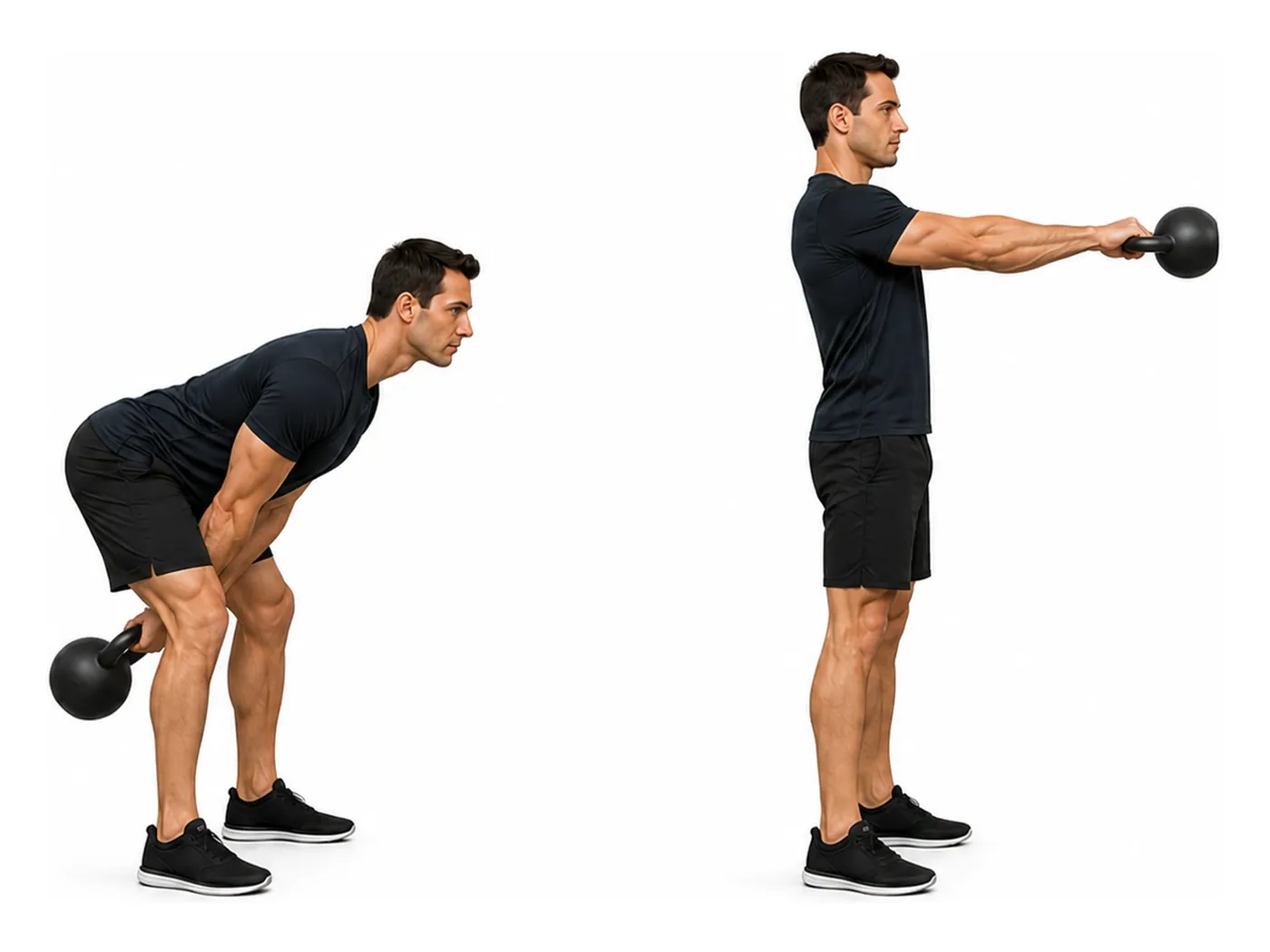
How to do it
- Set upStand with the bell a forearm's length in front of you, feet a little wider than your hips.
- Hike it backHinge at the hips, grip the handle with both hands, and snap the bell back between your legs like a football hike.
- Drive the hipsFire your hips forward hard and let the bell float up on its own. Your arms are ropes, not levers.
- Finish tallStand fully upright with glutes and core braced. The bell rises to about chest height and no higher.
If your knees travel forward and the bell dips toward the floor instead of back between your legs, you are squatting rather than hinging. Push your hips back toward the wall behind you and let your knees stay soft.
Muscles worked
- glutesprimary
- hamstrings
- adductors
- core
Hover a muscle to find it on the figure. Dark green is the primary mover, lighter green is supporting work.
No kettlebells? Swap it out
Both of these train the same hinge, but slowly. Neither reproduces the fast hip drive that makes the swing a power exercise, so treat them as a way to own the pattern rather than a like-for-like substitute.
Other options in this pattern
How many sets should you do?
That depends on your goal, your ability, and how many days you train. Answer three questions and the builder works out your sets and reps, plus a full week around them.